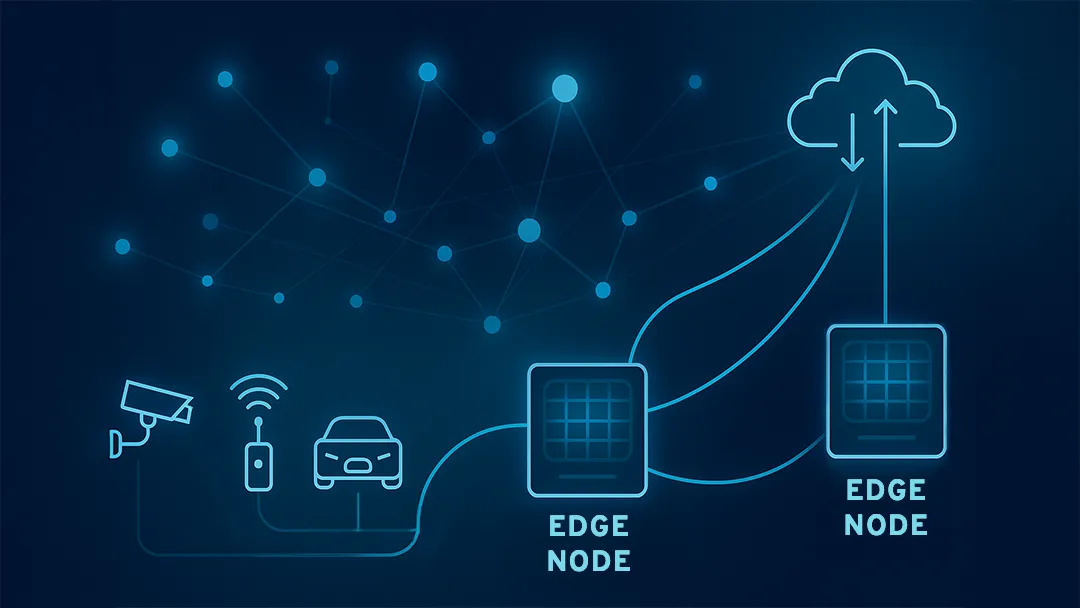
Edge computing is a modern computing model that processes data closer to where it is generated instead of sending all information to a centralized cloud or distant data center. As digital technologies continue to expand across industries, traditional cloud systems often struggle to manage growing volumes of data while maintaining speed, efficiency, and reliability. Edge computing addresses this challenge by moving computing resources, storage, and analysis closer to devices, users, and physical environments.
Today, billions of connected devices generate enormous amounts of information every second. Smartphones, industrial sensors, security cameras, smart appliances, autonomous vehicles, and wearable technologies constantly create data that requires immediate processing. Sending all this information to remote servers can create delays, increase bandwidth costs, and reduce system responsiveness. Edge computing reduces these limitations by enabling local data processing at or near the source.
Definition of Edge Computing
Edge computing refers to a distributed computing framework in which data processing occurs near the physical location where data is generated rather than relying entirely on centralized cloud infrastructure. The term “edge” represents the outer boundary of a network where users, devices, and systems interact directly with digital services.
In a traditional cloud environment, devices collect data and transmit it over the internet to centralized data centers for processing and analysis. After computation is completed, results are sent back to the device. Although effective for many applications, this process may introduce latency and network dependency.
Edge computing changes this approach by placing computing power directly at the network edge. Devices or nearby local servers can analyze information immediately, allowing faster decision-making and reducing unnecessary data transfers.
How Edge Computing Works
Edge computing operates through a combination of local devices, edge nodes, gateways, and cloud services. Data generated by connected devices is first collected at the source. Instead of transmitting all information to distant infrastructure, nearby computing resources process the data locally.
The process generally follows several stages:
Data Generation
Sensors, cameras, machines, and digital devices continuously create raw information.
Local Processing
Edge servers or embedded processors analyze and filter incoming data close to the source.
Decision Execution
Systems immediately perform required actions based on processed information.
Cloud Integration
Only necessary or summarized data is transferred to centralized cloud systems for long-term storage, advanced analytics, or historical analysis.
This hybrid structure combines the speed of local processing with the scalability of cloud computing.
Key Components of Edge Computing
Several technologies work together to make edge computing possible.
Edge Devices
These include smartphones, IoT sensors, industrial equipment, autonomous vehicles, and wearable technologies capable of collecting and processing information.
Edge Servers
Edge servers are localized computing units positioned close to users or operational environments. They execute processing tasks with minimal delay.
Network Infrastructure
Reliable communication channels enable smooth coordination between devices, edge nodes, and cloud systems.
Cloud Services
Although processing occurs locally, cloud platforms continue to provide centralized storage, analytics, security management, and system coordination.
Benefits of Edge Computing
Edge computing provides several advantages that make it increasingly valuable across industries.
Reduced Latency
One of the most significant benefits is lower response time. Processing data closer to users minimizes delays and enables near real-time performance. This capability is especially important for applications such as autonomous systems and industrial automation.
Improved Bandwidth Efficiency
Instead of transmitting massive amounts of raw data to centralized systems, edge computing filters and processes information locally. This reduces network congestion and lowers communication costs.
Enhanced Reliability
Edge systems can continue operating even when internet connectivity becomes unstable or unavailable. Local processing ensures uninterrupted service in remote or mission-critical environments.
Better Data Privacy
Sensitive information can remain within local infrastructure instead of continuously moving across public networks. This approach may strengthen privacy and support regulatory requirements.
Scalability
Organizations can expand operations by deploying additional edge devices without overloading centralized infrastructure.
Applications of Edge Computing
Edge computing supports innovation across multiple sectors.
Smart Cities
Urban systems use edge computing to manage traffic signals, monitor infrastructure, optimize energy usage, and improve public services in real time.
Healthcare
Medical devices and remote monitoring systems process patient information quickly to support faster clinical decisions and improve healthcare delivery.
Manufacturing
Factories implement edge computing to monitor machinery, detect equipment issues, and automate production with minimal delays.
Transportation
Connected vehicles use edge processing for navigation, safety systems, and real-time environmental awareness.
Retail
Retail businesses apply edge computing for inventory tracking, customer analytics, and personalized shopping experiences.
Challenges of Edge Computing
Despite its advantages, edge computing also introduces operational challenges.
Security Risks
Distributing computing resources across numerous devices increases potential attack surfaces and requires stronger security controls.
Infrastructure Complexity
Managing multiple edge locations can become more difficult than maintaining centralized systems.
Maintenance Requirements
Hardware updates, monitoring, and software management must occur across many distributed environments.
Standardization Issues
As technologies evolve, interoperability between platforms and devices remains an ongoing challenge.
Edge Computing and Cloud Computing
Edge computing does not replace cloud computing. Instead, both models complement each other.
Cloud computing excels at centralized storage, large-scale analytics, and long-term resource management. Edge computing focuses on immediate processing and fast decision-making.
Many organizations adopt a hybrid architecture where edge systems handle real-time operations while cloud platforms manage broader computational tasks.
Future of Edge Computing
The future of edge computing appears increasingly connected to advancements in artificial intelligence, fifth-generation mobile networks, and the Internet of Things. As more devices become interconnected, demand for low-latency processing and localized intelligence will continue to grow.
Emerging technologies such as autonomous transportation, smart manufacturing, augmented reality, and intelligent infrastructure depend heavily on edge architectures. Businesses are expected to invest further in distributed computing environments to improve performance, reduce operational costs, and support digital transformation.
Conclusion
Edge computing represents a significant shift in how digital information is processed and delivered. By moving computation closer to the source of data generation, organizations achieve faster response times, greater efficiency, improved reliability, and stronger operational flexibility. Rather than replacing cloud infrastructure, edge computing creates a balanced ecosystem where local intelligence and centralized resources work together. As connected technologies continue to expand globally, edge computing will remain an essential foundation for the next generation of digital innovation.