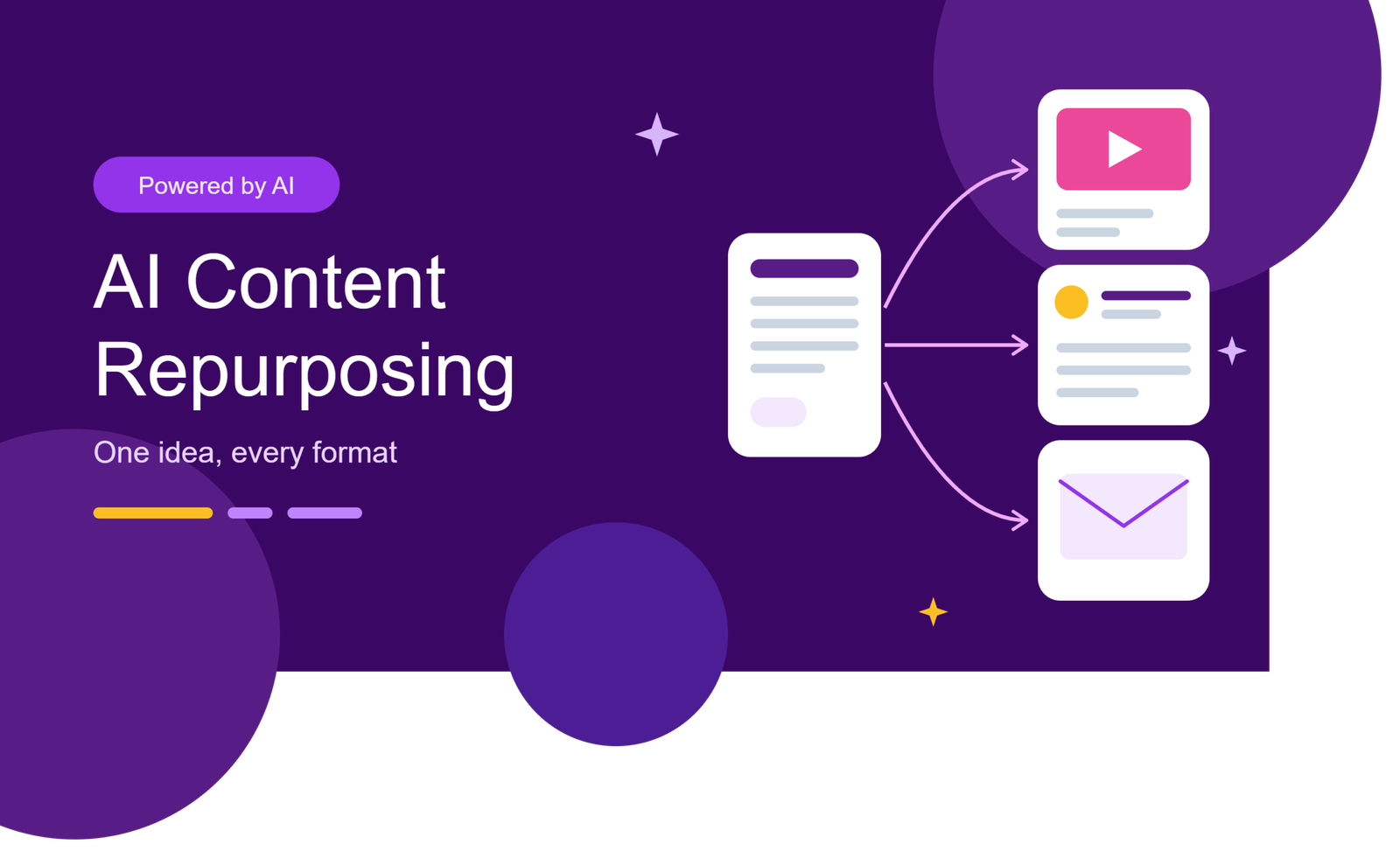
AI content repurposing is the process of using artificial intelligence to transform existing content into multiple formats without creating everything from scratch. A single blog post can become social media captions, email newsletters, video scripts, podcasts, infographics, LinkedIn articles, or short-form content with the help of AI-powered tools.
Instead of replacing human creativity, AI accelerates repetitive tasks while preserving the original message. Businesses, marketers, bloggers, and content creators use AI content repurposing to increase content reach, improve productivity, and maintain a consistent brand presence across digital channels.
When used strategically, AI helps extend the lifespan of valuable content and ensures every piece delivers greater long-term value.
Why AI Content Repurposing Matters
Creating high-quality content requires time, research, and creativity. Publishing it once and leaving it unused limits its potential. AI content repurposing allows organizations to maximize every content asset by adapting it for different audiences and platforms.
Key benefits include:
- Reduces content production time
- Improves marketing efficiency
- Expands audience reach
- Maintains consistent messaging
- Supports multi-channel marketing
- Increases return on content investment
- Simplifies content distribution workflows
Rather than producing dozens of new articles each month, businesses can transform their existing library into fresh, engaging content.
How AI Content Repurposing Works
Artificial intelligence analyzes the original content, identifies its core ideas, and restructures the information into new formats. Modern AI models understand context, tone, keywords, and audience preferences, making the output more natural than simple copy-and-paste editing.
The typical workflow includes:
Content Analysis
AI scans blogs, videos, podcasts, webinars, reports, or ebooks to understand the main topics and supporting information.
Key Information Extraction
Important facts, quotes, statistics, headings, and actionable insights are identified for reuse.
Format Transformation
The AI converts the content into multiple formats, including:
- Social media posts
- Email campaigns
- Video scripts
- Podcast summaries
- FAQ sections
- Landing page copy
- Infographic outlines
- Product descriptions
Content Optimization
Finally, AI improves readability, updates language, enhances SEO, and adjusts the writing style for the intended audience.
Popular Content Formats Created Through AI
One of AI’s biggest strengths is its ability to generate several content variations from a single source.
Blog to Social Media
Long-form articles can become engaging LinkedIn updates, X posts, Facebook content, Instagram captions, and Threads posts.
Blog to Email Newsletter
AI extracts valuable insights and turns them into concise newsletters that encourage readers to visit the full article.
Webinar to Blog
Recorded webinars and presentations can be transformed into informative blog posts complete with headings, summaries, and key takeaways.
Podcast to Article
Audio transcripts become polished articles optimized for search engines while preserving the speaker’s expertise.
Video to Short Clips
AI identifies highlight moments and creates scripts, captions, and summaries for short-form video platforms.
SEO Benefits of AI Content Repurposing
Search engine optimization becomes more effective when content is distributed strategically rather than repeatedly rewritten.
AI content repurposing supports SEO by:
Expanding Keyword Coverage
Repurposed content naturally targets semantic keywords, related search queries, and long-tail search phrases.
Strengthening Topical Authority
Publishing multiple content assets around one subject helps establish expertise within a niche.
Increasing Internal Linking Opportunities
Blogs, guides, newsletters, and resource pages can link to one another, improving website structure and user navigation.
Improving Content Freshness
Refreshing older articles with updated information signals ongoing relevance to both readers and search engines.
Best Practices for AI Content Repurposing
Using AI effectively requires thoughtful planning rather than complete automation.
Start with High-Performing Content
Identify articles, videos, or podcasts that already generate traffic or engagement. Repurposing successful content often produces the best results.
Adapt for Each Platform
Every platform has different audience expectations. A LinkedIn article should sound more professional, while Instagram captions should be concise and conversational.
Add Human Expertise
AI can generate drafts quickly, but human editing improves accuracy, storytelling, and originality. Adding personal insights and industry experience makes the final content more valuable.
Update Outdated Information
Before republishing, verify facts, statistics, examples, and references to ensure accuracy.
Maintain Brand Consistency
Review tone, terminology, and messaging so every content format reflects the same brand identity.
Common Challenges
Although AI offers significant advantages, it should not operate without oversight.
Potential challenges include:
- Generic wording
- Missing context
- Inaccurate information
- Duplicate messaging
- Limited emotional storytelling
These issues can be minimized through careful editing and quality assurance before publication.
Industries Benefiting from AI Content Repurposing
Many industries use AI-driven content transformation to scale their marketing efforts.
Examples include:
- Digital marketing agencies
- SaaS companies
- E-commerce businesses
- Healthcare organizations
- Financial services
- Educational platforms
- Technology companies
- Online publishers
- Consulting firms
- Personal brands
Regardless of industry, organizations with large content libraries often experience the greatest efficiency gains.
Future Trends in AI Content Repurposing
AI continues to evolve beyond simple text generation. Emerging technologies are making content transformation faster, smarter, and more personalized.
Future developments may include:
Personalized Content Variations
AI will tailor content based on audience interests, demographics, and browsing behavior.
Multilingual Content Repurposing
Businesses will translate and localize content for global audiences while preserving natural language quality.
Voice and Video Optimization
Advanced AI will generate voiceovers, subtitles, and platform-specific video edits automatically.
Intelligent Content Distribution
AI systems will recommend the best publishing schedule, channels, and audience segments based on performance analytics.
Conclusion
AI content repurposing has become an essential strategy for businesses seeking to maximize the value of every piece of content they create. By transforming blogs, videos, podcasts, webinars, and reports into multiple engaging formats, organizations can increase visibility, strengthen SEO performance, and reach wider audiences without constantly starting from scratch.
The most successful approach combines AI’s speed with human creativity, editorial judgment, and industry expertise. When balanced effectively, AI content repurposing creates a sustainable content marketing workflow that saves time, improves consistency, and supports long-term digital growth while delivering meaningful value to readers across every platform.

One thought on “AI Content Repurposing: How to Maximize Content Value Across Every Platform”