Understanding customers has always been important for business growth. Companies need to know what customers want, how they behave, why they make purchasing decisions, and what factors influence their loyalty. However, analyzing large amounts of customer information manually can be difficult and time-consuming.
AI customer analytics uses artificial intelligence to analyze customer data and identify meaningful patterns, trends, and behaviors. By combining machine learning, predictive analytics, natural language processing, and automation, businesses can gain deeper customer insights and make faster data-driven decisions.
From e-commerce and SaaS companies to financial services and customer support teams, AI-powered customer analytics is becoming an important part of modern business strategy.
What Is AI Customer Analytics?
AI customer analytics is the use of artificial intelligence to collect, process, analyze, and interpret customer-related data.Ultimate Guide to AI Customer Support Software
Traditional customer analytics often depends on predefined reports and manual analysis. AI-based systems can go further by identifying patterns that may be difficult to detect using conventional methods.
Customer analytics software powered by AI can analyze information such as:
- Purchase history
- Website activity
- Customer interactions
- Support conversations
- Product usage
- Email engagement
- Customer feedback
- Demographic information
- Customer lifetime value
- Churn behavior
The goal is not simply to collect more data. The goal is to transform customer data into useful insights that businesses can act on.
How Does AI Customer Analytics Work?
Data Collection
AI customer analytics begins by gathering information from different business sources. These may include websites, mobile applications, CRM platforms, e-commerce stores, customer support systems, surveys, and marketing platforms.
Combining these sources can provide a broader view of the customer journey.
Data Processing
Raw customer information can contain duplicate records, incomplete fields, and inconsistent formats. AI systems can help organize and process this information before analysis.
Machine learning algorithms can identify relationships between different customer behaviors and interactions.
Pattern Detection
One major advantage of AI is its ability to analyze large datasets quickly. AI algorithms can detect recurring patterns in customer activity.
For example, an online retailer might discover that customers who view certain products multiple times are more likely to purchase within a specific period.
Predictive Analysis
AI predictive customer analytics can use historical and current information to estimate possible future behavior.
Businesses may use these predictions to identify customers who could churn, estimate purchasing behavior, or identify potential high-value customers.
Benefits of AI Customer Analytics
Better Customer Understanding
AI can provide detailed insights into customer preferences and behaviors. Instead of relying only on basic demographic information, businesses can analyze actual customer interactions.
This helps companies understand what customers do rather than simply assuming what they might want.
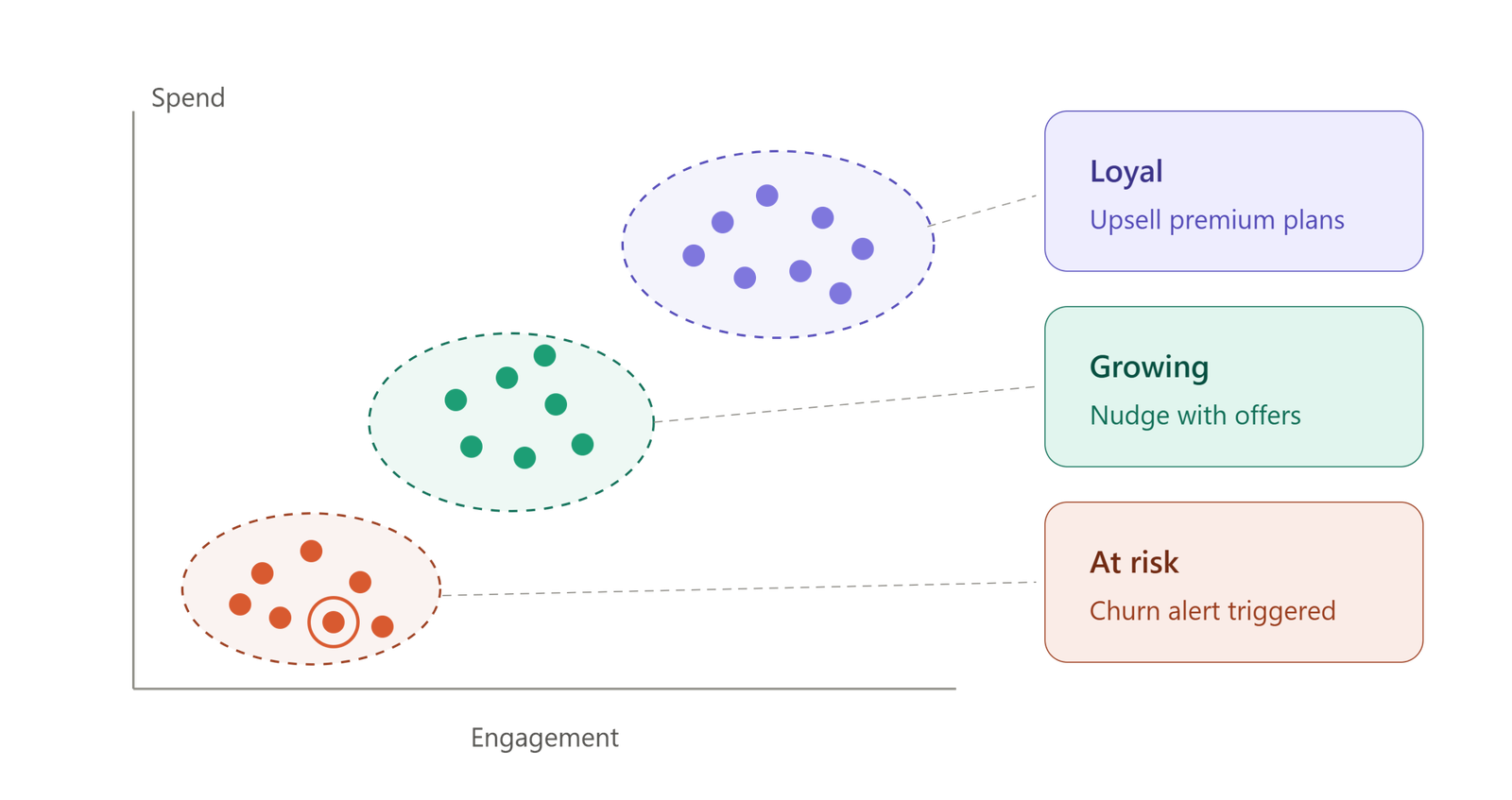
Improved Customer Segmentation
Traditional customer segmentation often uses broad categories such as age, location, or purchase history.
AI customer segmentation can analyze multiple behavioral signals simultaneously. Customers can then be grouped according to purchasing patterns, engagement levels, interests, or predicted behavior.
This can help businesses create more relevant marketing campaigns.
Personalized Customer Experiences
AI-powered customer insights can support personalized recommendations, messages, offers, and product experiences.
For example, an e-commerce platform can analyze browsing and purchasing behavior to recommend products that are relevant to individual customers.
Reduced Customer Churn
Customer churn can be expensive for businesses. AI churn prediction tools can analyze signals such as declining engagement, reduced purchases, negative feedback, or changes in product usage.
When potential churn risks are identified early, businesses can investigate the underlying problem and decide whether an appropriate retention strategy is needed.
Increased Marketing Efficiency
AI analytics can help marketing teams understand which campaigns, channels, and customer segments generate meaningful engagement.
Instead of treating every customer the same, marketers can use behavioral data to develop more targeted strategies.
AI Customer Analytics Use Cases
E-Commerce
Online stores can analyze browsing behavior, purchase history, abandoned carts, product searches, and customer interactions.
These insights can support product recommendations, personalized promotions, customer segmentation, and retention strategies.
SaaS Businesses
SaaS companies can analyze product usage and customer engagement. AI can help identify users who are highly engaged, customers who may need additional support, and accounts showing declining activity.
Customer Support
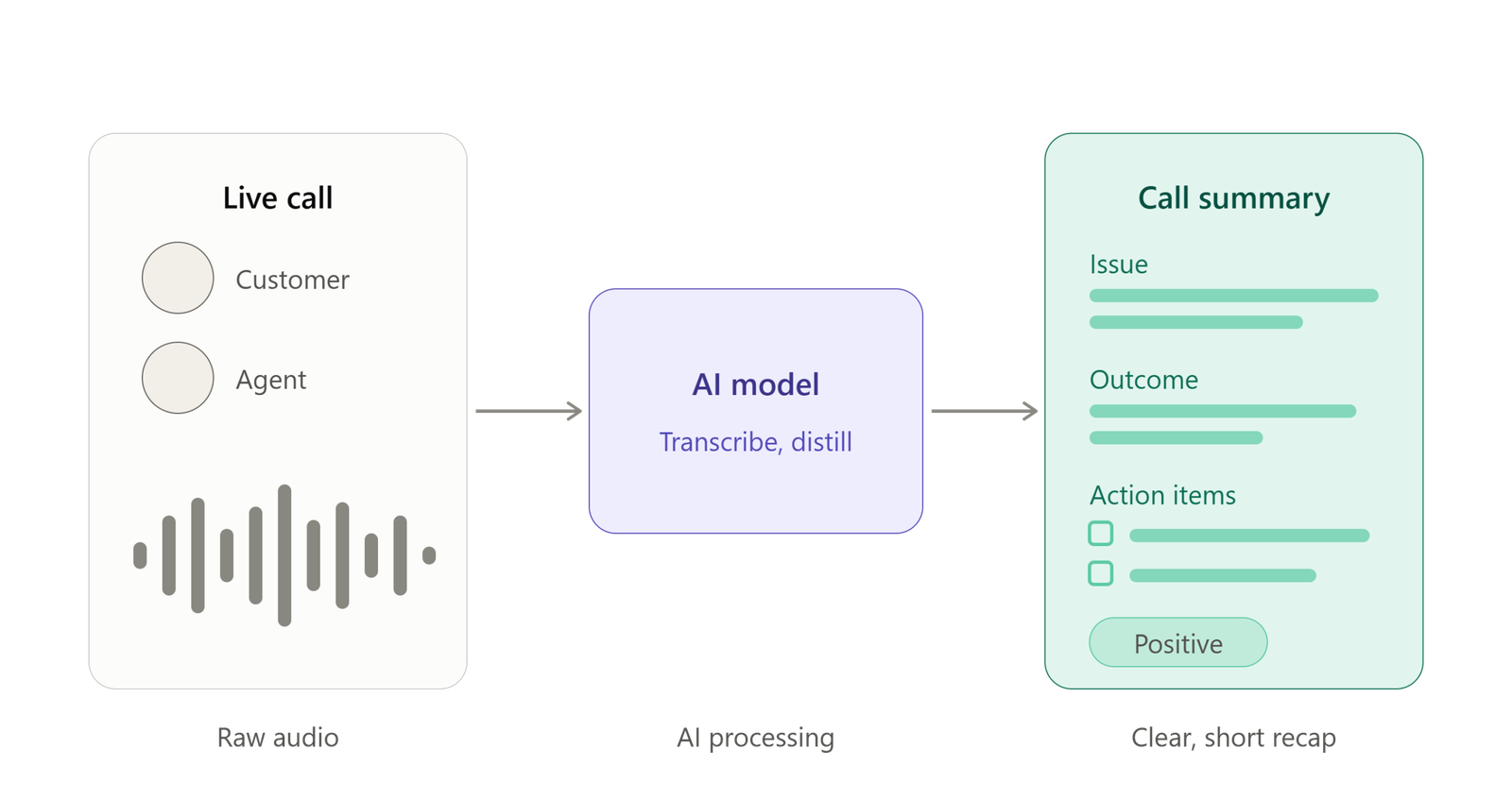
AI customer analytics can analyze support conversations, tickets, and feedback to identify common customer problems.
Businesses can use these insights to discover recurring issues and improve their support processes.
Financial Services
Financial organizations can analyze customer behavior to understand product usage, engagement, and service preferences. Because financial information can be highly sensitive, strong security and appropriate data governance are essential.
Marketing Analytics
AI can connect customer behavior with marketing activity to help businesses understand campaign performance and customer journeys.
Important AI Customer Analytics Features
Businesses evaluating an AI analytics platform should consider several capabilities.
Real-Time Customer Insights
Real-time analytics can help companies respond quickly to changes in customer behavior.
Predictive Analytics
Predictive models can identify potential outcomes such as churn risk, purchasing probability, or customer lifetime value.
Customer Journey Analytics
Understanding the complete customer journey can reveal where customers encounter problems or abandon a process.
Natural Language Analysis
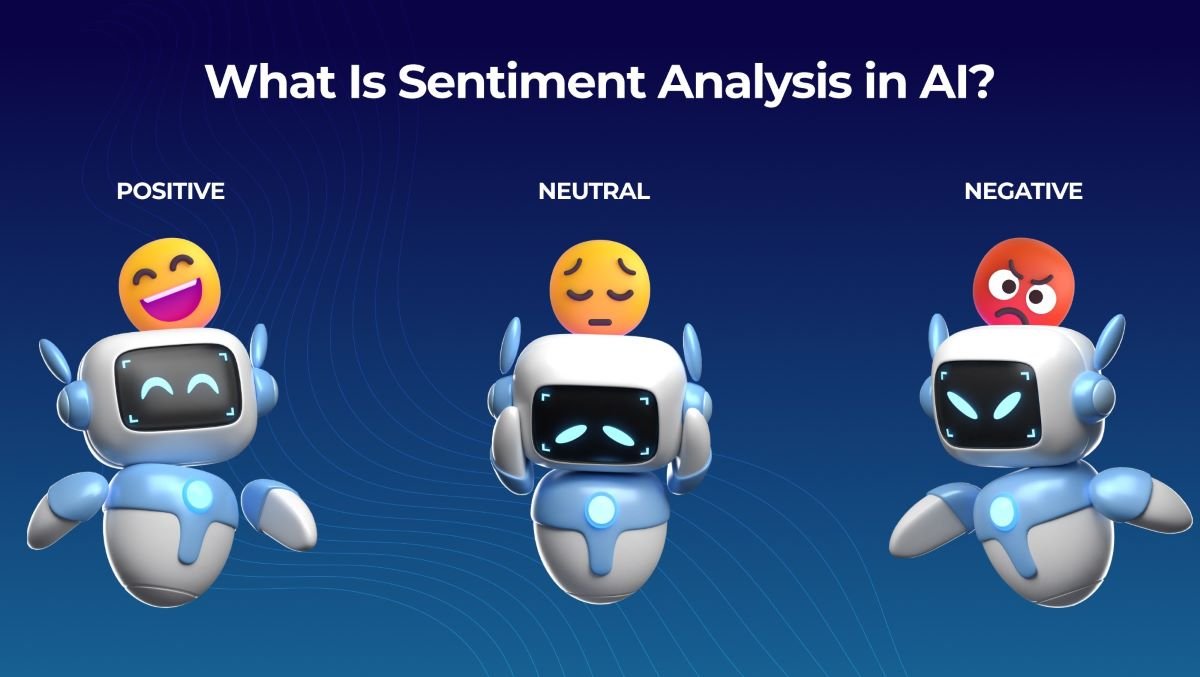
Natural language processing can analyze reviews, surveys, emails, chat conversations, and support tickets to identify customer sentiment and recurring topics.
Dashboard and Reporting
Clear dashboards allow teams to turn complex analytics into understandable business information. Custom reports can make insights more relevant to different departments.
Challenges of AI Customer Analytics
AI customer analytics also has limitations. Poor-quality data can produce unreliable results, while incomplete customer profiles can make predictions less accurate.
Privacy is another important consideration. Businesses should collect customer information responsibly, provide appropriate transparency, protect sensitive data, and comply with applicable privacy requirements.
AI-generated insights should also be reviewed by people when decisions could significantly affect customers.
The Future of AI Customer Analytics
The future of customer analytics is moving toward more automated and predictive decision support.
AI systems are increasingly capable of combining customer behavior, conversations, transactions, and engagement data to create a more complete understanding of individual customers.
As AI technology develops, businesses may use customer intelligence platforms to detect opportunities, identify emerging problems, and automate parts of the customer experience.
The combination of AI customer insights, predictive analytics, customer segmentation, behavioral analytics, and marketing automation can create a powerful foundation for data-driven customer strategies.
Final Thoughts
AI customer analytics helps businesses transform large volumes of customer information into practical insights. From predicting churn and improving segmentation to personalizing experiences and understanding customer journeys, AI can make customer analysis faster and more comprehensive.
However, successful implementation requires more than sophisticated algorithms. Businesses need reliable data, appropriate privacy controls, clear objectives, and human oversight.
When these elements work together, AI customer analytics can help organizations understand customers more effectively and build smarter, more responsive business processes.

One thought on “AI Customer Analytics: How Artificial Intelligence Improves Customer Insights”