
AI chatbots have quickly become one of the most practical applications of artificial intelligence for modern businesses. From answering customer questions to assisting employees and generating leads, these intelligent systems can handle conversations at a scale that traditional support teams often cannot….
Unlike older rule-based chatbots, modern AI chatbots can understand natural language, interpret user intent, remember conversational context, and generate more relevant responses. This makes them useful across customer service, sales, marketing, ecommerce, healthcare, education, and many other industries.
This guide explains what AI chatbots are, how they work, their benefits, common use cases, and what businesses should consider before implementing one.
Must Read: Ultimate Guide to AI Marketing Tools
What Are AI Chatbots?
AI chatbots are software applications that use artificial intelligence to communicate with people through text or voice. They can understand questions, process information, and provide automated responses in a conversational format.
Traditional chatbots usually depend on predefined rules and fixed decision trees. If a customer asks a question outside those rules, the chatbot may fail to provide a useful answer.
Modern AI-powered chatbots use technologies such as natural language processing, machine learning, and generative AI. These technologies allow them to handle a broader range of questions and conversations.
For businesses, this means customer interactions can become faster, more scalable, and less dependent on manual responses.
How Do AI Chatbots Work?
Understanding the technology behind AI chatbots helps businesses choose the right solution.
Natural Language Processing
Natural language processing, or NLP, allows an AI chatbot to understand human language. Customers do not have to phrase questions in a specific way.
For example, users might ask, “Where is my package?” or “Can you tell me when my order will arrive?” An intelligent chatbot can recognize that both questions are related to order tracking.
Machine Learning
Machine learning helps chatbot systems identify patterns in conversations and improve their ability to classify requests.
With appropriate training and monitoring, an AI chatbot can become better at recognizing common customer intents and providing relevant information.
Generative AI
Generative AI allows chatbots to create responses dynamically instead of selecting only from a limited collection of predefined answers.
This makes conversations feel more natural and allows the system to respond to questions that were not explicitly written into a script.
However, generative AI can sometimes produce inaccurate information. Businesses should therefore connect chatbots to reliable knowledge sources and establish appropriate safeguards.
Key Benefits of AI Chatbots
Businesses are adopting conversational AI because it can solve several common operational challenges.
24/7 Customer Support
AI chatbots can provide assistance outside normal business hours. Customers can ask questions at night, during weekends, or while human support teams are unavailable.
This is especially useful for companies serving international customers across multiple time zones.
Faster Responses
Customers generally prefer quick answers. An AI chatbot can respond to many routine questions within seconds.
Reducing waiting times can improve the customer experience and help support teams manage larger volumes of conversations.
Lower Operational Costs
Automating repetitive interactions can reduce the amount of manual work required from customer service representatives.
Instead of answering the same questions repeatedly, agents can focus on complicated cases that require human judgment.
Improved Employee Productivity
AI chatbots are not limited to customer-facing applications. Businesses can also use internal AI assistants to help employees find information, understand company policies, access documents, and complete routine tasks.
This can reduce time spent searching for information across multiple systems.
Scalable Customer Service
A human support team has a limited capacity. During product launches, promotions, or seasonal periods, customer inquiries can increase rapidly.
AI chatbots can handle multiple conversations simultaneously, helping businesses manage spikes in demand without immediately expanding their support workforce.
Common AI Chatbot Use Cases
AI chatbot technology can support different departments and business processes.
Customer Service
Customer service remains one of the most common applications. Chatbots can answer FAQs, explain policies, assist with basic troubleshooting, and direct customers to appropriate resources.
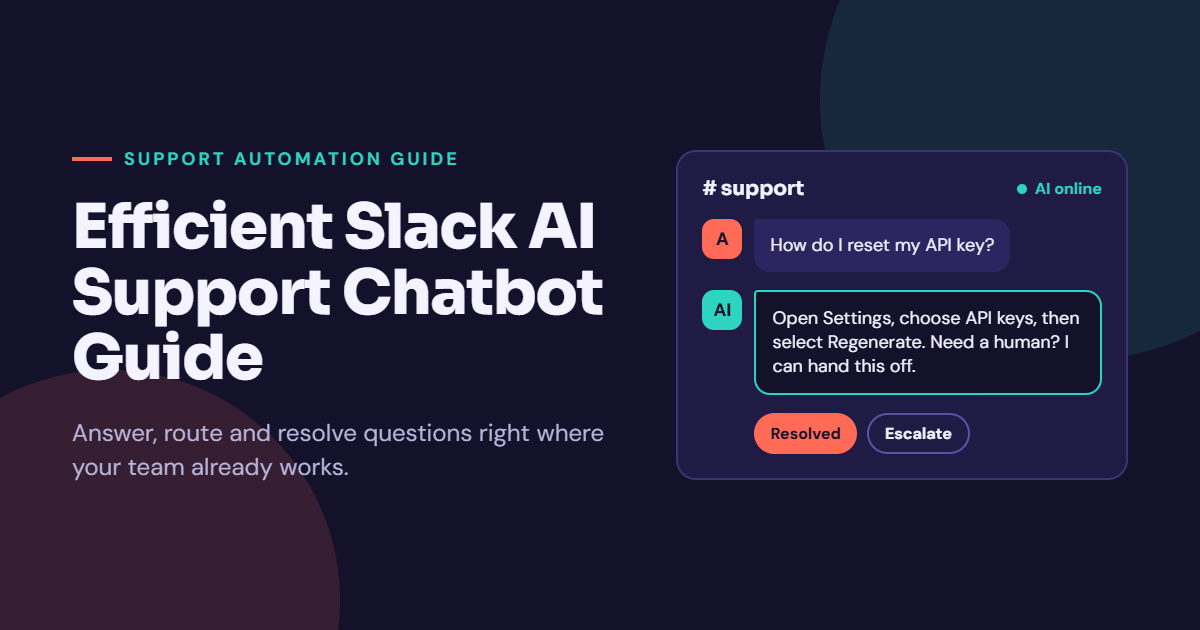
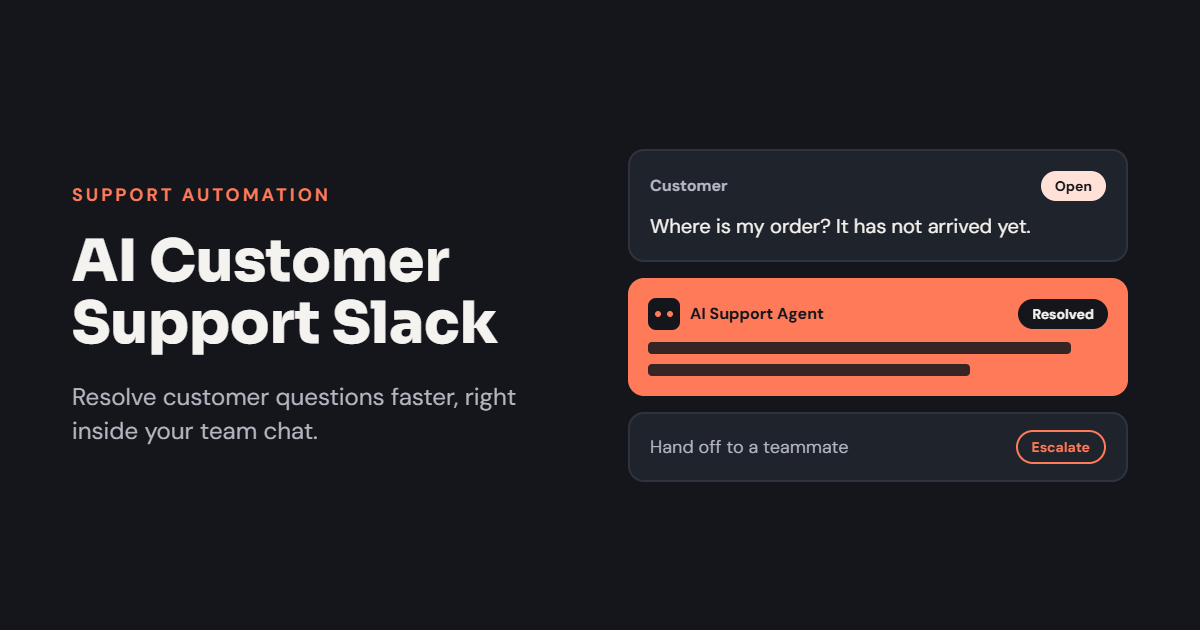
When an issue becomes too complicated, the chatbot can transfer the conversation to a human agent.
Ecommerce
Online stores can use AI chatbots to help shoppers find products, answer product questions, provide order updates, explain return policies, and support customers during checkout.
A well-designed ecommerce chatbot can also recommend products based on customer requirements.
Lead Generation
AI chatbots can engage website visitors and collect basic information from potential customers.
For example, a chatbot can ask about a visitor’s requirements, budget, business size, or preferred service before sending qualified leads to a sales representative.
Marketing
Marketing teams can use conversational AI to engage visitors, distribute relevant information, conduct surveys, and guide prospects toward useful content.
This creates another interactive channel between brands and their audiences.
Internal Business Assistance
Companies can deploy AI assistants for employees. These systems can help workers locate internal documentation, answer common HR questions, and navigate business processes.
The result can be a more efficient internal information system.
Important Features to Look For
Not every AI chatbot platform offers the same capabilities. Businesses should evaluate several features before making a decision.
Context Awareness
A capable chatbot should understand the context of an ongoing conversation rather than treating every message as an isolated question.
Human Handoff
Customers should have an easy way to reach a human representative when the AI cannot resolve an issue.
Knowledge Base Integration
Connecting an AI chatbot to trusted company information can help keep responses accurate and relevant.
Analytics
Chatbot analytics can reveal conversation volume, common questions, resolution rates, escalation rates, and areas where customers frequently need assistance.
These insights can help businesses continuously improve their support strategy.
Multichannel Support
Depending on business needs, organizations may want AI chatbot integration across websites, mobile applications, messaging platforms, and other customer communication channels.
Challenges of AI Chatbots
Despite their advantages, AI chatbots are not a perfect solution.
One major concern is accuracy. An AI system may provide an incorrect or misleading response, particularly when it lacks reliable information.
Privacy and security are also important. Businesses should understand how customer information is processed, stored, and protected.
Another challenge is poor implementation. A chatbot that makes it difficult to reach a human, provides generic answers, or misunderstands customers can create frustration instead of improving the experience.
The solution is not to automate everything. Businesses should identify which interactions are suitable for automation and which require human involvement.
How to Implement an AI Chatbot Successfully
Start with a specific business problem rather than simply adding a chatbot because AI is popular.
Identify repetitive customer questions, build a reliable knowledge base, and define clear escalation rules.
Test the chatbot using real-world questions before launching it publicly. Monitor its conversations after deployment and regularly review incorrect or incomplete answers.
It is also important to measure meaningful outcomes. Track metrics such as customer satisfaction, resolution rate, response time, conversion rate, and escalation frequency.
The Future of AI Chatbots
AI chatbots are moving toward more intelligent and proactive digital assistants. Future systems will increasingly connect conversational AI with customer data, business applications, workflow automation, and analytics.
Instead of simply answering questions, chatbots will be able to perform more tasks, such as updating records, scheduling appointments, assisting with purchases, and initiating business workflows.
However, human involvement will remain essential for complex, sensitive, and high-value interactions.
Final Thoughts
AI chatbots are changing how businesses communicate with customers and employees. Their ability to provide instant assistance, automate repetitive conversations, and operate at scale makes them valuable for organizations of different sizes.
But technology alone does not guarantee better customer service. Successful chatbot implementation requires accurate information, thoughtful automation, strong security, human escalation, and continuous optimization.
Businesses that focus on solving genuine customer problems rather than simply deploying AI are more likely to achieve meaningful results. The goal should be straightforward: use AI to make conversations faster and more useful while keeping human expertise where it matters most.
4 thoughts on “AI Chatbots: How Intelligent Conversational Technology Is Transforming Business”